

Surviving the intellectual apocalypse
Why you should subscribe


Friends,
Earlier this year, when we moved our newsletter onto Substack, we decided to dispense with this salutation. It no longer made sense on the new platform, from which we intended to share not only the usual notes to our readers, but also interviews with authors, event transcripts, close readings, reflections on pieces from our archive, and commentary on stories in the news. But after nearly a year of writing to you anonymously as our inaugural Substack Czar, I’d like to take a more personal approach in explaining to you what The Drift means to me.
We addressed our readers as friends from the beginning because we felt a sense of kinship with anyone who would choose to seek out a brand new, left-wing literary magazine run by twentysomethings and read the mostly unknown writers we published. We figured we shared not merely a set of interests, but a set of values, the foundation for the deepest friendships: belief in the importance of intellectual rigor, artistic exploration, and political transformation, unified by a deep dissatisfaction with established institutions and ways of thinking. In 2019 and 2020, when we were incubating The Drift, we sensed that reading and writing — especially critical reading and writing, outside the well-trodden pathways of what we were fond of calling the media hivemind — were becoming countercultural practices.
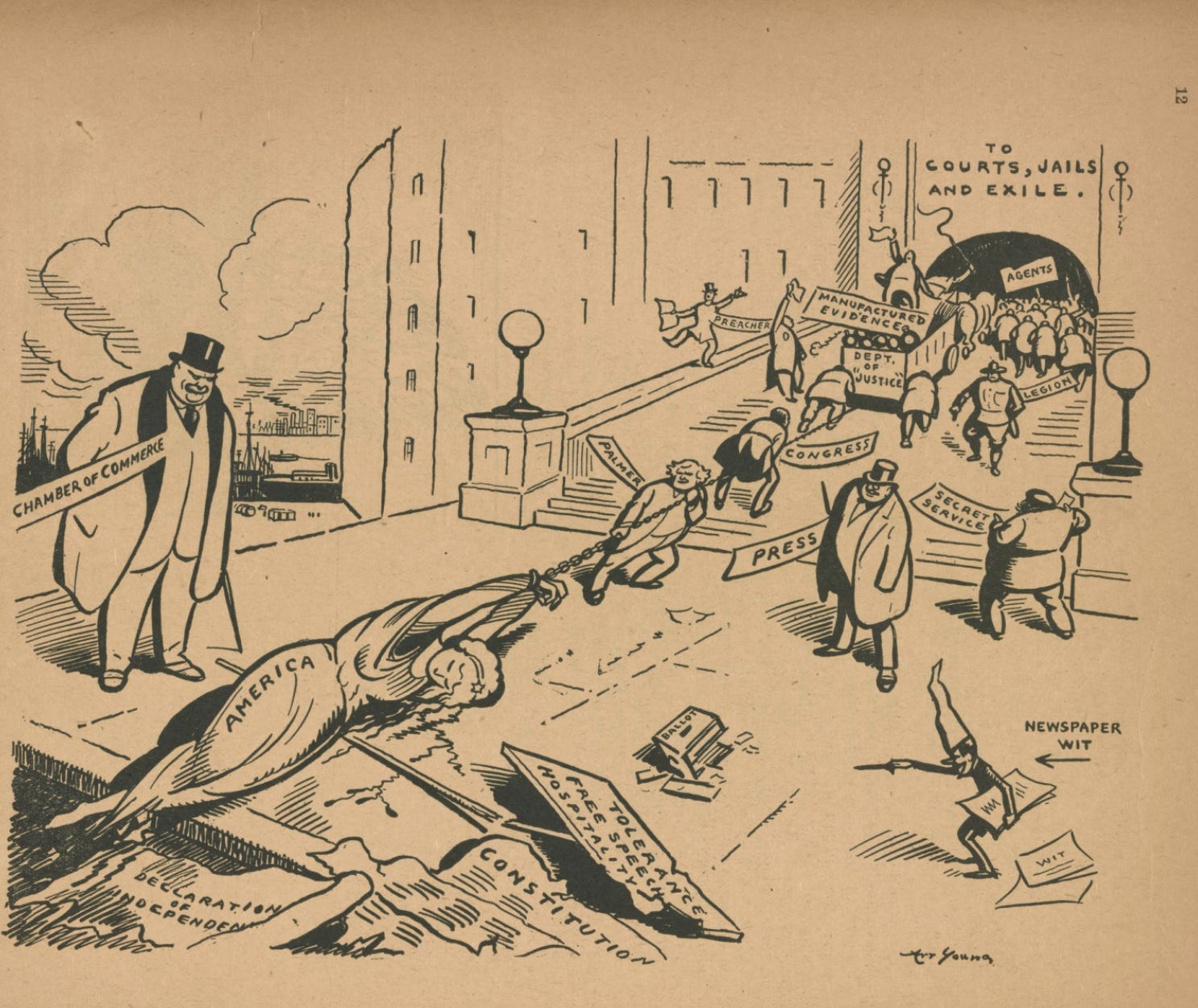
Five years later, we feel all these intuitions even more strongly, because the situation is incomparably more dire. As this year draws to a close, it is clear to me — if you’ll allow me to put on my historian hat for a moment — that we are in the midst of the most serious crisis for independent thought and expression since the postwar Red Scare.
It happened the way Hemingway said people go bankrupt: gradually and then suddenly. Economics paved the way. If the dawn of the digital era initially seemed to reverse the late twentieth century’s trend toward media conglomeration, the pendulum had swung with a vengeance by the start of the 2010s. Now, just a handful of corporations — Disney, Paramount Global, Comcast, Fox, and Warner Bros. Discovery — control almost all traditional media. Digital media is just as consolidated, except by a small group of overlords that also wield control over many other areas of our lives: Mark Zuckerberg, Jeff Bezos, as well as the erstwhile White House employee who owns X, formerly Twitter. Low interest rates spawned a new cohort of online media startups, but many were swiftly cannibalized in a private equity feeding frenzy. Those who tried to pursue the life of the mind in the academy, outside the churn of the media market, were often swept up in a whirlwind of adjunctification that left them as precarious and overworked as freelance journalists. To top it all off, OpenAI announced the release of a new product in November 2022 that promised consumers they could enlist a robot to do their reading and writing (and thinking) for them.
It was an immense pile of kindling, and the protest movement against the Israeli genocide in Gaza supplied the spark for the incineration of our freedom of expression. Israel’s allies quickly wrenched the long-established Palestine exception to free speech into a yawning chasm into which anyone could fall: not only Israel’s critics but also university administrators accused merely of suppressing pro-Palestinian protest with inadequate zeal. Students found themselves blacklisted from job opportunities and hounded by specially dedicated harassment trucks; professors who were labeled subversive lost teaching privileges and even their jobs. No amount of prestige or acclaim could insulate against censorship: Viet Thanh Nguyen, Pulitzer winner, MacArthur Fellow, and New York Times opinion writer, had an event at 92NY cancelled in October 2023 after he signed an open letter demanding a ceasefire. Meanwhile, tech companies pursued quieter but more expansive campaigns to suppress dissent. In December 2023, Human Rights Watch issued a report documenting what it described as “Systemic Censorship of Palestine Content on Instagram and Facebook.” And throughout it all, Elon Musk used his control of X to blast right-wing content into all our feeds.
In the first year of his new reign, Donald Trump has seized on the climate of repression fostered under his predecessor to launch a brazen offensive against the speech rights of his opponents. He has spirited away foreign-born critics of American policy to federal prisons and threatened them with deportation; slashed federal funding for the arts and humanities and for scientific research deemed ideologically hostile to his regime; weaponized the federal government’s regulatory powers to encourage media companies to discipline comedians; and directed the national security apparatus to take steps toward the criminalization of “antifascist” advocacy. Just as disturbing as the Trump administration’s own initiatives have been the efforts of a wide range of institutions to comply with them preemptively. Corporations have dismantled programs with even the faintest hints of “wokeness.” Universities fed up with unruly students and faculty have enacted sweeping restrictions on protest. Media bosses with their own animus against the left have taken the opportunity to impose more conservative editorial lines, as Jeff Bezos has done at the Washington Post and as Bari Weiss is in the process of doing at CBS.
This whole sorry story is worth rehearsing in detail because it’s easy for us to become inured to what is happening, like Al Gore’s symbolic frogs getting slowly boiled alive. We are in an emergency. This little magazine is not, of course, by itself a solution; no single institution can serve as a substitute for a vibrant intellectual and literary sphere. But a healthy culture is formed of a patchwork of institutions like the one The Drift has become in its first half-decade. That requires, in turn, a community willing to commit its resources to the preservation of critical thinking in the face of the powerful forces arrayed against it.
If you’re reading this note, you are already part of our community, and we are very grateful for you. Our independence from the corporate media makes us dependent on the generosity of those who share our conviction in the importance of our mission. Please consider reaffirming your support by subscribing to The Drift.
Your friend,
Madeleine Baker
Senior Editor, The Drift
New short story https://nimnim1.substack.com/p/poly-hell